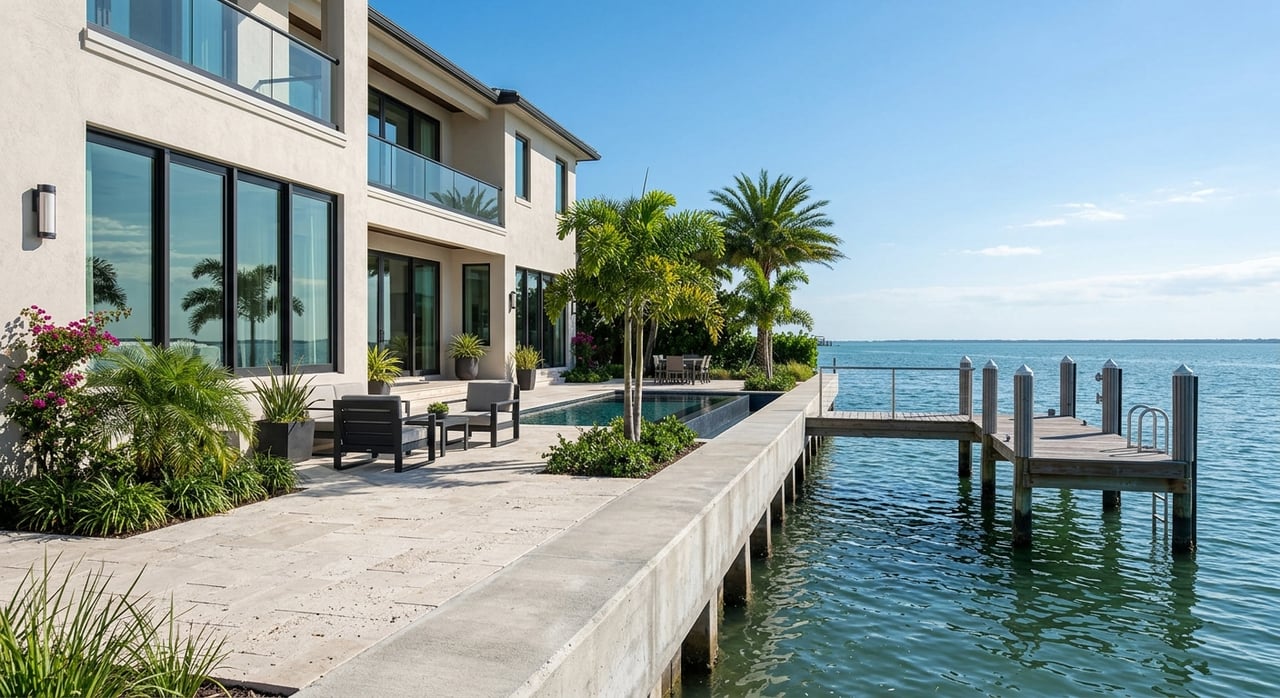
Buying waterfront in Vero Beach can feel like a dream until the inspection and permit questions start piling up. If you are considering a property in 32963, you are not just evaluating the home itself. You are also evaluating flood risk, insurance requirements, shoreline improvements, and the exact rules that apply to that parcel. This guide will help you understand what to review before closing so you can move forward with more clarity and confidence. Let’s dive in.
Why due diligence matters in 32963
The first thing to know is that 32963 is not governed by one single jurisdiction. The ZIP code includes unincorporated Indian River County, the City of Vero Beach, Indian River Shores, and Orchid, which means the permitting path can vary from property to property. That is why waterfront due diligence here starts with confirming which local authority governs the parcel.
Flood risk is also more layered than many buyers expect. According to Indian River County flood information, flooding in this area can come from the Atlantic Ocean, the Indian River Lagoon, tributaries, heavy rain, and tidal surges. In other words, even if a home is not directly on the ocean, water-related risk still deserves close review.
Start with parcel-specific flood review
A waterfront address may sound straightforward, but flood exposure is highly site specific. Indian River County uses the current FEMA Flood Insurance Rate Maps effective January 26, 2023 for permit review, and the county can also help with flood-zone map assistance. That makes current local records more useful than relying on an old disclosure or a generic online map.
If the property is in Indian River Shores, the flood pattern changes again. The town explains on its flood information page that much of the Atlantic frontage is in VE zone, while the rest is generally AE. The town also notes an important point for buyers: flood zones and evacuation zones are not the same thing.
Why flood zones matter
Flood zones can affect building rules, future improvements, and insurance underwriting. FEMA explains that Special Flood Hazard Areas are the areas where mandatory flood insurance purchase rules can apply when a property is financed through a government-backed lender. That means the exact parcel location can have a direct impact on your ownership costs.
Ask for elevation records early
Indian River County says elevation certificates for previously developed properties may be available through the Building Division or Environmental Planning Section, with records dating back to 1997. FEMA explains that Elevation Certificates document finished-floor elevations in flood-prone areas and can be used for flood-insurance rating. If one already exists, it can be an important early document in your review.
Inspections buyers often need
A standard home inspection is important, but for waterfront homes in Vero Beach, it is rarely the whole story. Insurance underwriting often requires additional reports, especially on older properties. Knowing that up front can help you avoid delays during the inspection period.
Four-point inspection
Citizens says it requires a four-point inspection for certain applications on homes more than 20 years old. This report reviews four major systems:
- Roof
- Plumbing
- Electrical
- HVAC
If the roof is older, more documentation may also be needed to show remaining useful life. Florida’s Chief Financial Officer also notes that insurers may require a 4-point inspection, roof inspection, or other property-condition review as part of underwriting or renewal.
Wind mitigation report
A wind mitigation report is separate from a four-point inspection and can affect insurance pricing. Florida’s CFO explains that a mitigation inspection helps identify windstorm credits, and Citizens says the applicable form is the OIR-B1-1802 Uniform Mitigation Verification Inspection Form. This inspection must be completed by an authorized professional.
For many buyers, this report is one of the most practical tools in the due-diligence process because it can influence premiums and show how the home’s construction features are viewed by an insurer.
Insurer inspections
Even if you order your own reports, your insurer may still want to inspect the property. Florida’s CFO says insurers may use their own inspectors or inspection firms as part of underwriting, and factors such as location, age, construction type, prior coverage history, and mitigation credits can affect the rate. On waterfront property, underwriting is often as important as the contract itself.
Flood documents and coastal certifications
Some waterfront homes need more than a basic Elevation Certificate. This is especially true on barrier-island parcels or on properties where future renovation plans could trigger updated compliance requirements.
Indian River Shores states that in a Special Flood Hazard Area, new or substantially improved structures need a finished-construction Elevation Certificate. The town also says V-zone structures require a V Zone Certificate prepared by a professional engineer or architect before permit issuance, and certain nonresidential buildings may need a Floodproofing Certificate.
Why this matters for future plans
If you are buying with renovation or expansion in mind, these documents matter just as much as they do for new construction. Indian River Shores also says the lowest finished floor of a new or substantially improved structure in an SFHA must be at least 2 feet above the Base Flood Elevation, including attached garages, enclosures, crawlspaces, and building machinery. Since 32963 includes multiple jurisdictions, you should confirm the exact standard that applies to your parcel before you close.
Dock and seawall due diligence
For riverfront, lagoon-front, and some canal-side properties, the dock and seawall can be just as important as the house. A visible structure does not automatically mean it was fully permitted or finalized. This is one of the most overlooked parts of waterfront due diligence.
Indian River County’s dock and seawall permit checklist shows that docks and seawalls follow separate permit tracks. Depending on the work and location, the file may involve:
- A survey or site plan
- Signed and sealed structural drawings
- Proof of value
- Planning Department approval
- Public Works review
- Possible DEP or Army Corps approvals
Questions to ask about existing waterfront structures
Before closing, ask for documentation tied to any existing dock, seawall, lift, or shoreline improvement. Key items include:
- Permit history
- Final approvals
- As-built documents
- Any related surveys or sealed drawings
Indian River County also notes in its community development FAQ that a dock permit must be obtained before construction begins, and docks may face limits on projection and setbacks. Those details can affect whether an older improvement is compliant or whether a future change is feasible.
Oceanfront properties may face CCCL review
If you are looking at an oceanfront parcel, there is another major issue to check early: the Coastal Construction Control Line. The Florida Department of Environmental Protection says the CCCL program regulates structures and activities that may contribute to beach erosion, destabilize dunes, damage upland property, or interfere with public access.
DEP also states that habitable structures built seaward of a CCCL need a CCCL Elevation Certificate so the lowest horizontal structural member is above the local 100-year storm elevation. For buyers considering future redevelopment, additions, or a replacement home, this can be a critical part of the decision.
Wetlands, mangroves, and shoreline vegetation
Not every waterfront issue is visible from the dock. If proposed work could affect wetlands, mangroves, dune systems, or other shoreline areas, the approval path may be more complex than a standard building permit.
Indian River County says in its FAQ that clearing or altering wetlands or deepwater habitat may require county environmental planning permits. DEP also states that wetland impacts can trigger Environmental Resource Permitting review. For buyers of estuary parcels, lagoon frontage, or oceanfront sites, this is an important part of feasibility review.
How insurance fits into the timeline
Flood insurance and homeowners insurance are not the same policy. FEMA explains that flood insurance is required for buildings in high-risk flood areas when they secure federal or federally related financing. If the parcel falls within a Special Flood Hazard Area, this should be addressed well before closing.
Insurance timing matters because underwriting can affect both cost and insurability. Citizens says underwriters review inspection forms and supporting documents and may reject forms if the inspector is not the proper professional or the license cannot be verified. That is why it helps to treat inspection reports as active underwriting documents, not just transaction paperwork.
A practical due-diligence checklist
For many buyers in 32963, the most effective process is to move in a clear sequence. A practical approach is to:
- Confirm the parcel’s governing jurisdiction.
- Pull the current flood-zone determination.
- Request any existing Elevation Certificate from local records.
- Order a four-point or roof-related inspection if the home is older.
- Order a wind mitigation inspection if needed for insurance review.
- Verify dock, seawall, CCCL, and ERP status where applicable.
- Review all permit history before the inspection period ends.
This approach helps you evaluate not just the home you are buying today, but also the ownership costs and project limitations you may face later.
Waterfront purchases in Vero Beach can be exceptionally rewarding, but they also call for a more careful review than many inland properties. When you understand the parcel’s flood context, document trail, insurance requirements, and shoreline permitting status, you are in a much stronger position to make a sound decision. If you want discreet, local guidance on evaluating a waterfront opportunity in 32963, connect with Luke Webb for a private consultation.
FAQs
What inspections are commonly needed for a waterfront home in Vero Beach 32963?
- In addition to a standard home inspection, buyers often need a four-point inspection, a wind mitigation report, and sometimes insurer-ordered inspections depending on the age, condition, and location of the property.
What flood documents should buyers request for a Vero Beach waterfront property?
- Buyers should request the current flood-zone determination and any existing Elevation Certificate, and they may also need parcel-specific coastal or flood-compliance documents depending on the jurisdiction and property type.
What should buyers verify about a dock or seawall in Indian River County?
- Buyers should verify permit history, final approvals, surveys, sealed drawings, and any as-built documents because an existing structure does not by itself confirm full permitting or approval.
What is the CCCL for oceanfront property in Vero Beach?
- The Coastal Construction Control Line is a state coastal regulation line that can trigger additional permitting and elevation certificate requirements for structures on certain oceanfront parcels.
Is flood insurance required for all waterfront homes in Vero Beach 32963?
- Not always, but FEMA says flood insurance is required when a building is in a Special Flood Hazard Area and secures federal or federally related financing.
Why does jurisdiction matter for a waterfront property in ZIP code 32963?
- ZIP code 32963 includes multiple governing areas, including Indian River County, the City of Vero Beach, Indian River Shores, and Orchid, so permit rules, floodplain review, and local requirements can vary by parcel.