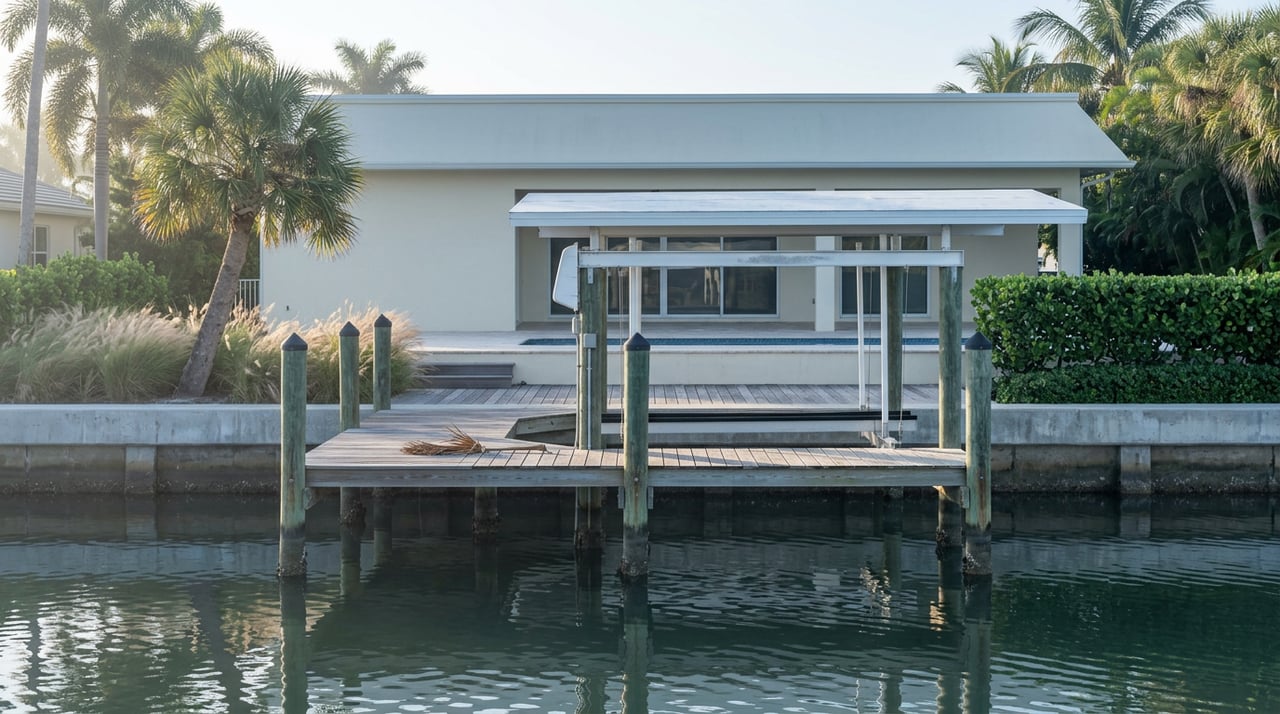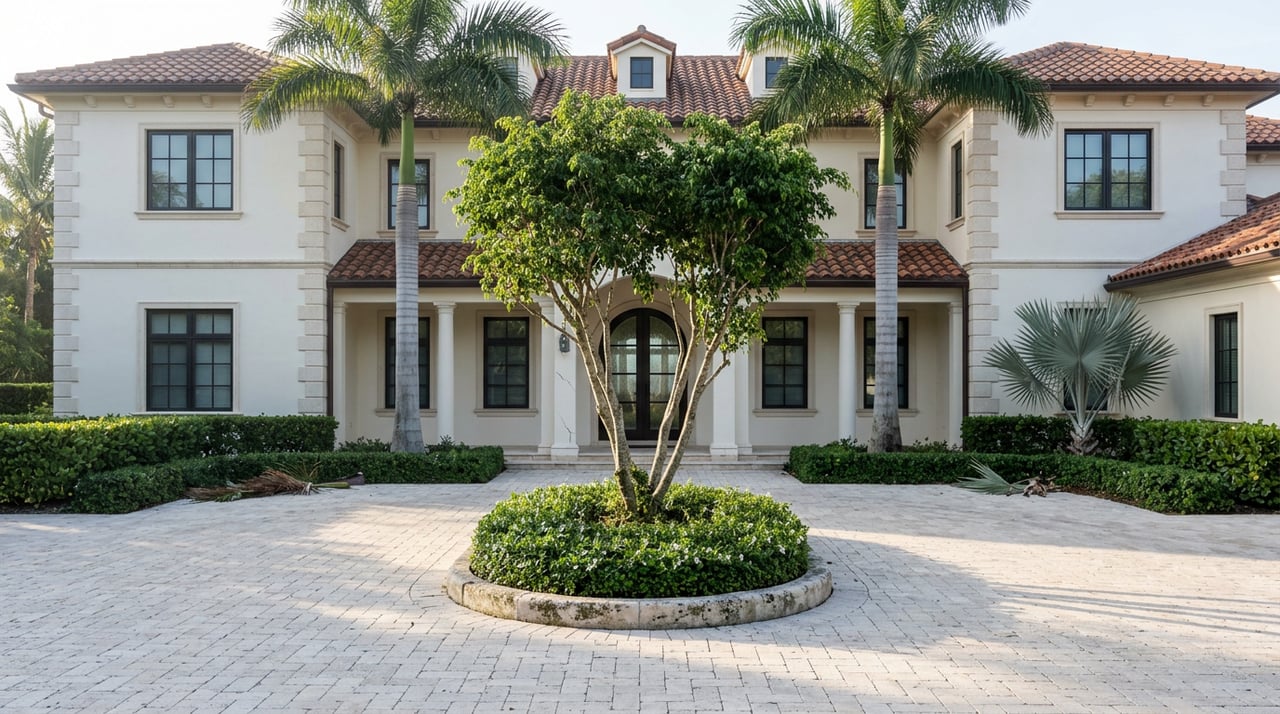
Picture two estates a few miles apart. Both sit on the water. Both are served by the same utility company, and both bills arrive with the same logo, the same billing cycle, the same rate table stapled to the back. One owner, though, gets to vote for the five people who set that rate table. The other does not, and never will, unless the property is sold to someone who lives inside the city line.
That is the situation facing anyone comparing a home inside the City of Vero Beach to one in John's Island, which sits entirely within the Town of Indian River Shores. Both draw water and sewer service from Vero Beach Utilities. Only one set of customers can unseat the council members who just approved the largest rate increase the utility has proposed in years. The other set, roughly 40 percent of the system's customer base, pays whatever that council decides.
One utility, two electorates
Vero Beach Utilities serves the city itself plus most of Indian River Shores and the unincorporated South Barrier Island under separate franchise arrangements, and about 40 percent of the utility's revenue comes from customers outside city limits, according to reporting on the rate study. Those customers pay into the same system, fund the same capital projects, and absorb the same rate hikes as city residents. They just cannot vote on any of it. Indian River Shores Vice Mayor Bob Auwaerter has raised that exact objection with city officials, noting that customers who live outside the city cannot vote city council members out of office even though their bills fund the same rate decisions.
This is not a new grievance. In 2012, Vero Beach signed a franchise agreement promising to charge Indian River Shores the same rates as Indian River County Utilities. The city did not hold to that promise, the Shores sued for breach of contract, and Judge Janet Croom ruled in the city's favor. The franchise agreement runs through 2042, with a required notice by 2037 if the town ever wants to leave Vero's system for the county's. For a buyer thinking about a ten or fifteen-year hold in John's Island, that timeline matters more than it sounds. There is no near-term exit ramp.
What just changed, and when
On August 25, 2026, the Vero Beach City Council unanimously approved a new rate structure that takes effect October 1. A typical residential customer using 4,000 gallons a month currently pays $83.54 for combined water and sewer service. That bill rises to $94.92 in 2027, then $107.30, then $122.45 by 2030, an increase of 46.7 percent over four years. The driver is a $217 million capital improvement program built around a new $164 million "One Water" treatment plant under construction at the Vero Beach Regional Airport, replacing an aging facility at the Three Corners site. Water and Sewer Director Rob Bolton has said the utility is also budgeting for roughly 30 new construction connections and about 300 septic-to-sewer conversions annually, on top of a projected 4.1 percent yearly rise in operating costs.
Here is where the comparison gets useful. Indian River County Utilities charges $67.70 for the same 4,000-gallon usage, and nothing close to Vero's increases is currently planned there. Fort Pierce Utilities Authority currently charges $95.76 for equivalent service, a rate Vero's own bill will pass by 2027. A property's utility cost trajectory, in other words, now depends heavily on which provider serves it, and that is a function of a jurisdictional map, not the size of the dock or the finish level of the kitchen.
| Provider | Current bill (4,000 gal) | Bill by 2030 |
|---|---|---|
| Vero Beach Utilities | $83.54 | $122.45 |
| Indian River County Utilities | $67.70 | No comparable increases currently planned |
| Fort Pierce Utilities Authority | $95.76 | Rising, exact 2030 figure not yet published |
At the August 25 council meeting, longtime city resident Adelene Clemons, who had just switched from septic to sewer, told the council her new sewer bill had come in at almost two and a half times her water bill, and said plainly, "it's not fair to the people who have been here for forever and ever." Her frustration was about the increase itself. The outside-customer frustration is a layer beneath that: the same increase, applied without a ballot to appeal to.
The 6 percent that isn't a fee
Buried inside every Vero Beach utility bill, city or outside customer alike, is a 6 percent transfer of utility revenue into the city's general fund, a mechanism that helps keep Vero's property taxes lower for the people who can vote for the officials who set it. Mayor John Cotugno has floated raising that transfer to 8 percent, framing state efforts to cap local revenue tools as an "assault" on the city's fiscal independence. Auwaerter's response was blunt: raising the transfer while rates are already climbing is "piling on customers who are already facing a tough inflationary economy." Reporting on the rate study notes that these transfers make up between 10 and 12 percent of a typical monthly bill, and that dollar figure only grows as the base rate climbs toward $122.45.
For an outside customer in Indian River Shores, this transfer funds services and tax relief they do not receive. Former Shores vice mayor Michael Ochsner put it plainly at a recent finance committee meeting, saying "we spent a lot of money trying to get divorced from the City of Vero Beach utilities" and that the town is still stuck with it.
Why the fix everyone is celebrating may not apply here
In June 2026, Governor Ron DeSantis signed House Bill 1451, and Indian River Shores officials described it as a real step toward protecting outside ratepayers. The bill lets a municipality keep a surcharge on customers outside its boundaries only if that surcharge predates March 1, 2026, and only to satisfy bond covenants already in place, with a hard phase-out by July 1, 2029.
Here is the detail that matters for a buyer weighing this cost curve: Vero Beach eliminated its explicit 10 percent outside-customer surcharge back in 2011. The mechanism driving today's cost gap between city and outside customers is not a discrete surcharge line item, it is the 6 percent general fund transfer embedded in the base rate that every customer pays, resident or not. HB 1451 was written to sunset surcharges. It says nothing about transfers baked into the rate itself. The law being framed as relief may not touch the specific structure actually shaping what John's Island and Indian River Shores property owners pay.
What this means at the closing table
None of this shows up on a listing sheet. A comparable set of oceanfront or riverfront properties, one inside city limits, one in Indian River Shores, can look identical on paper while carrying meaningfully different utility cost trajectories over a hold period, and only one owner will ever have a vote over how fast that trajectory climbs. For a buyer weighing a long-term purchase, that is worth pricing into the decision the same way you'd price in insurance or association dues.
Before comparing two Vero Beach-area properties on carrying cost, it is worth asking:
- Is this property inside Vero Beach city limits, or served as an outside customer under a franchise agreement?
- If it is an outside customer, is the franchise agreement close to expiring, or does it run for another decade or more?
- Once the rate increases take effect October 1, will the seller's most recent utility statement still reflect pre-increase billing, and has that been accounted for in any credits or prorations at closing?
- For properties recently switched from septic to sewer, has the new Wastewater Readiness-to-Serve Charge, which starts at $40.85 monthly for typical residential customers, been factored into the total cost picture?
None of these questions will show up in a search filter. They come up when someone who tracks this market walks a buyer through the fine print before an offer goes in.
The line separating a city vote from no vote at all runs quietly through some of Vero Beach's most desirable addresses. It will not change the character of a John's Island estate or the value of its beach access. It will, however, shape what that estate costs to hold for the next decade, and it deserves the same scrutiny buyers already give to flood zones or association budgets.
If you are comparing properties across that line and want a clear-eyed read on what it means for your specific purchase, Luke Webb & Associates can walk through the numbers with you. Request a private consultation before you write an offer, not after.